
Introduction
The internet is part of everyday life. We use it to learn, work, communicate, shop, and relax. While it offers many benefits, it also comes with risks. That is why learning how to stay safe online is very important for everyone. Beginners may feel unsure about what to trust, while intermediate users may feel confident but still make small mistakes. Both situations can lead to problems.
Online safety does not require advanced technical skills. It is about awareness, smart habits, and simple decisions. When you understand how to stay safe online, you reduce the risk of scams, data theft, and privacy loss. You also feel more confident while browsing, messaging, or using online services.
This guide is written in simple English to help beginners and intermediate users. It explains online safety clearly, step by step, using practical examples. Each section focuses on real-life situations that people face every day. By the end of this article, you will know how to protect your personal information, use devices safely, and avoid common online threats. Most importantly, you will learn how small actions can make a big difference in staying secure online.
What Is How to Stay Safe Online?
How to stay safe online means using the internet carefully and responsibly. It involves protecting your personal information, devices, and online accounts from threats such as scams, hackers, and harmful software. Online safety also includes protecting your identity, money, and reputation.
Staying safe online is similar to staying safe in the real world. Just as you lock your home and avoid strangers, you must protect your digital space. This includes using strong passwords, recognizing suspicious messages, and avoiding unsafe websites. Understanding how to stay safe online helps you enjoy the internet without constant worry.
Why Is How to Stay Safe Online Important?
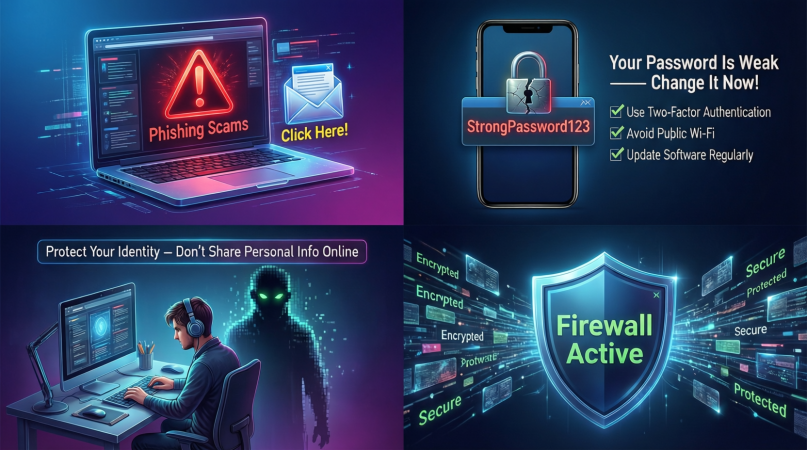
The internet attracts criminals because personal data has value. Cybercriminals target users who are unaware or careless. Without knowing how to stay safe online, people may experience identity theft, financial loss, or account takeovers.
Online safety is important because one mistake can affect many areas of life. A hacked email can lead to stolen social media accounts or financial damage. Learning how to stay safe online protects not only you but also your family and workplace. It creates a safer digital environment for everyone who interacts with you online.
Detailed Step-by-Step Guide
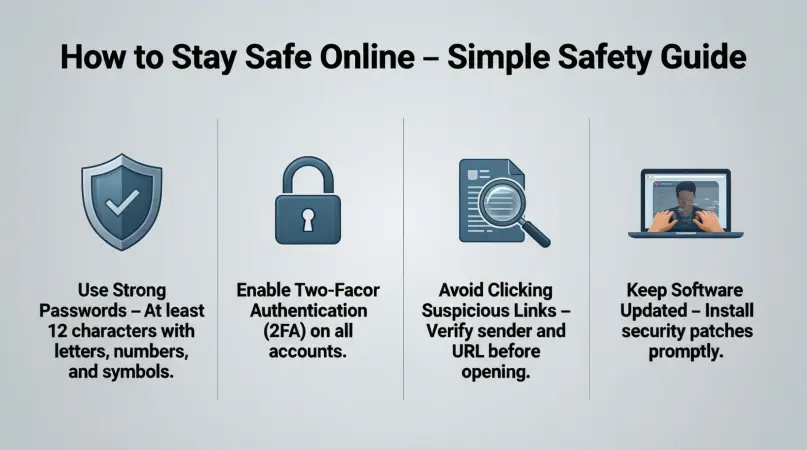
Create Strong and Unique Passwords
Passwords protect your online accounts.
- Use long passwords with letters, numbers, and symbols
- Avoid names, dates, or simple words
- Use different passwords for different accounts
- Consider a trusted password manager
Strong passwords make it harder for attackers to access your accounts.
Enable Two-Factor Authentication
Two-factor authentication adds extra security.
- Use codes sent to your phone or email
- Enable it on important accounts
- It protects you even if a password is stolen
This step greatly improves how to stay safe online.
Be Careful with Emails and Messages
Scammers often use fake messages.
- Do not click unknown links
- Check sender details carefully
- Never share personal information
Suspicious messages should always be ignored or deleted.
Use Secure Internet Connections
Not all connections are safe.
- Avoid sensitive tasks on public Wi-Fi
- Use secure home networks
- Disconnect when finished
Secure connections protect your data from being stolen.
Keep Software and Devices Updated
Updates fix security problems.
- Install system and app updates
- Enable automatic updates
- Remove unused applications
Updated devices are harder to attack.
Protect Social Media Privacy
Social platforms store personal data.
- Adjust privacy settings
- Limit public information
- Be careful with friend requests
Social media safety is part of how to stay safe online.
Benefits of How to Stay Safe Online
- Protects personal and financial information
- Reduces risk of scams and fraud
- Improves device performance and security
- Builds confidence while using the internet
- Encourages responsible online behavior
Disadvantages / Risks
- Requires time and consistency
- Some tools may feel inconvenient
- Overconfidence can still cause mistakes
- Ignoring updates reduces protection
Common Mistakes to Avoid
Many users make simple errors.
- Using the same password everywhere
- Ignoring updates and warnings
- Trusting unknown links
- Oversharing personal information
- Forgetting to log out on shared devices
Avoiding these mistakes supports better online safety.
FAQs
What are the most common online threats?
Common threats include phishing, malware, fake websites, and identity theft. Learning how to stay safe online helps reduce these risks.
How can beginners improve online safety?
Beginners should start with strong passwords, updates, and careful browsing. These steps create a strong safety foundation.
Is antivirus software enough?
Antivirus software helps, but safe habits are equally important. Awareness is key to full protection.
Can social media be risky?
Yes, especially when privacy settings are ignored. Smart sharing reduces risks.
How often should passwords be changed?
Passwords should be changed regularly, especially after security alerts or breaches.
Are children at risk online?
Children can face scams and harmful content. Education and guidance are essential.
Expert Tips & Bonus Points
- Use separate emails for important accounts
- Back up important data regularly
- Review app permissions
- Lock devices with passwords or biometrics
- Stay calm and think before clicking
Small habits lead to strong protection.
Conclusion
The internet offers endless opportunities, but it also requires responsibility. Learning how to stay safe online is essential for protecting your data, privacy, and peace of mind. Online safety is not about avoiding technology. It is about using it wisely.
By following simple steps such as strong passwords, updates, and careful browsing, you reduce most online risks. These habits become easier over time and fit naturally into daily life. Understanding how to stay safe online helps you feel confident and in control.