
Introduction
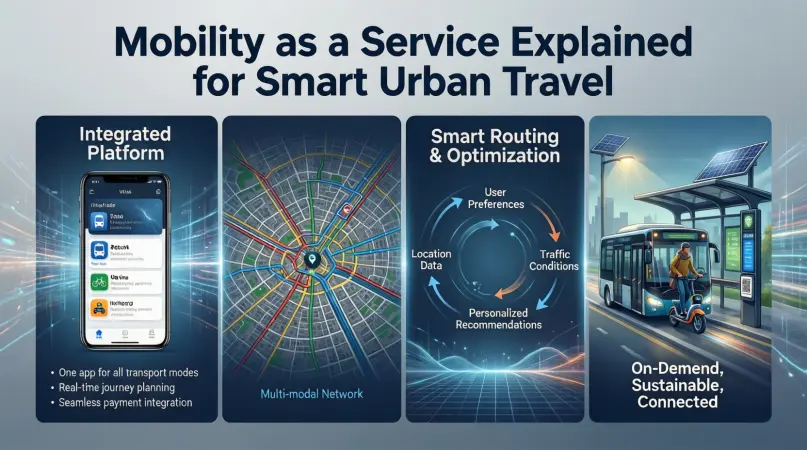
Mobility as a service is changing how people move from one place to another in modern cities. Instead of owning a car or using separate transport services, users can access different travel options through a single digital platform. This idea is simple, yet powerful, because it puts convenience, flexibility, and efficiency at the center of transportation.
In today’s fast-paced world, traffic congestion, rising fuel costs, and environmental concerns are major challenges. Many people feel stressed by long commutes and confusing travel choices. Mobility as a service helps solve these problems by combining public transport, ride-sharing, bike rentals, taxis, and even car rentals into one smooth experience. With just one app, users can plan, book, and pay for their entire journey.
For beginners, this concept may sound complex at first. However, once you understand the basics, it becomes clear and practical. Cities around the world are already adopting this model to improve urban mobility and reduce private car dependency. As a result, people save time, money, and effort.
This guide is written in simple English to help both beginners and intermediate readers. You will learn what mobility as a service means, why it is important, how it works step by step, and what benefits and risks it brings. By the end, you will have a clear picture of how this system is shaping the future of transportation.
What Is Mobility as a Service?
Mobility as a service, often called MaaS, is a modern approach to transportation that combines different travel services into one digital platform. Instead of using multiple apps or payment methods, users access all mobility options in one place.
These options usually include buses, trains, taxis, ride-hailing services, car sharing, bike sharing, and scooter rentals. The main goal is to provide seamless, door-to-door travel without the need to own a personal vehicle.
In simple terms, mobility as a service treats transportation like a subscription or on-demand service. Just as people stream movies instead of buying DVDs, they can now use transport when needed instead of owning cars.
A MaaS platform typically offers journey planning, real-time updates, booking, and payment features. Users choose the best route based on time, cost, or comfort. This approach makes daily travel more flexible and user-friendly.
Why Is Mobility as a Service Important?
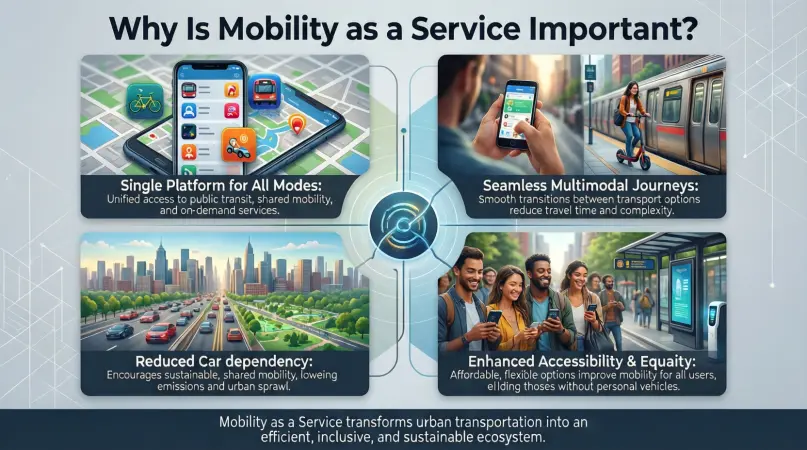
Mobility as a service is important because it addresses many problems faced by modern cities and travelers. Urban areas are growing quickly, and traditional transport systems often struggle to keep up.
First, it reduces traffic congestion by encouraging shared transport instead of private cars. When fewer people drive alone, roads become less crowded. This leads to faster travel times and less stress.
Second, mobility as a service supports environmental sustainability. Shared and public transport options produce fewer emissions per person. This helps improve air quality and fight climate change.
Third, it improves accessibility. People who cannot afford a car or are unable to drive still gain access to reliable transport. This includes students, elderly people, and individuals with disabilities.
Finally, MaaS supports smarter city planning. By analyzing travel data, city authorities can improve routes, schedules, and infrastructure. This results in better services for everyone.
Detailed Step-by-Step Guide
Step 1: Understanding Your Travel Needs
Before using mobility as a service, users must understand their daily travel patterns. This includes commute distance, travel time, budget, and comfort preferences.
For example, someone traveling short distances may prefer bikes or scooters. Long-distance commuters may rely on trains combined with ride-hailing services.
Knowing your needs helps you choose the right MaaS platform and plan better journeys.
Step 2: Choosing a MaaS Platform
Different cities offer different mobility as a service platforms. Some are run by private companies, while others are supported by local governments.
When choosing a platform, users should check available transport options, coverage area, pricing models, and user reviews. A good platform should be easy to use and reliable.
Step 3: Creating an Account
After selecting a platform, users create an account using basic information. This usually includes name, email address, and payment details.
Some platforms also offer subscription plans. These plans may include unlimited public transport rides or discounted rates for shared services.
Step 4: Planning a Journey
The journey planning feature is a key part of mobility as a service. Users enter their starting point and destination.
The platform then shows multiple route options. These options may vary by travel time, cost, or number of transfers. Real-time data helps users avoid delays.
Step 5: Booking and Payment
Once a route is selected, users can book the required services directly through the app. Payment is made in one transaction, even if multiple transport modes are used.
This step removes the hassle of buying separate tickets or carrying cash.
Step 6: Traveling and Tracking
During the journey, users receive live updates. These updates may include vehicle arrival times, route changes, or service alerts.
If needed, users can adjust their route mid-journey. This flexibility is one of the biggest strengths of mobility as a service.
Step 7: Feedback and Improvement
After completing the trip, users can provide feedback. This helps service providers improve quality and reliability.
Over time, platforms learn user preferences and offer more personalized travel suggestions.
Benefits of Mobility as a Service
- Saves time by combining planning, booking, and payment
- Reduces travel costs through shared and subscription models
- Lowers stress with real-time updates and flexible routes
- Improves environmental sustainability
- Increases accessibility for all user groups
- Reduces dependence on private car ownership
- Supports smarter urban transport planning
Disadvantages / Risks
- Requires reliable internet and smartphone access
- Data privacy and security concerns may arise
- Service availability may be limited in some areas
- Technical issues can disrupt travel plans
- Dependence on third-party providers
- Learning curve for first-time users
Common Mistakes to Avoid
One common mistake is assuming all MaaS platforms offer the same services. Coverage and options can vary greatly by city.
Another mistake is ignoring subscription details. Users should always read pricing terms to avoid unexpected charges.
Some users also forget to check real-time updates. This can lead to delays if services change suddenly.
Lastly, relying only on one transport mode reduces flexibility. The true value of mobility as a service lies in mixing different options.
FAQs
What makes mobility as a service different from ride-hailing?
Mobility as a service combines many transport modes in one platform, while ride-hailing focuses mainly on car-based trips.
Is mobility as a service expensive?
Costs depend on usage and subscription plans. Many users find it cheaper than owning and maintaining a car.
Can MaaS work in small cities?
Yes, but success depends on available transport options and local support.
Is my personal data safe?
Most platforms use security measures, but users should review privacy policies carefully.
Do I need a subscription?
Not always. Many platforms offer pay-as-you-go options.
Will MaaS replace public transport?
No, it complements public transport by making it easier to access and use.
Expert Tips & Bonus Points
Experts suggest starting with a trial period to understand how MaaS fits your routine. Testing different routes helps identify the best options.
Keeping notifications enabled ensures you receive important updates. This improves travel reliability.
Combining walking or cycling with public transport often saves time and improves health.
Finally, staying flexible and open to new travel habits allows users to get the most value from mobility as a service.
Conclusion
Mobility as a service represents a major shift in how people think about transportation. Instead of owning vehicles, users gain access to a wide range of travel options through one simple platform. This approach makes daily travel more flexible, affordable, and efficient.
As cities grow and mobility challenges increase, MaaS offers practical solutions. It reduces congestion, supports sustainability, and improves access to transport for different groups. While there are some risks and limitations, careful use and awareness can minimize these issues.