
Introduction
Electric vehicle innovations are changing how people think about transportation. Only a few years ago, electric cars were seen as slow, expensive, and limited in range. Today, they are smarter, faster, and more practical than ever before. Because of rapid improvements in technology, electric vehicles are now a real option for everyday drivers, businesses, and even governments.
In simple terms, electric vehicle innovations focus on improving batteries, charging systems, vehicle design, software, and overall efficiency. These changes help reduce pollution, lower running costs, and make driving more comfortable. As fuel prices rise and environmental concerns grow, more people are looking for cleaner alternatives. This is where electric vehicle innovations play a key role.
Another reason this topic matters is global demand. Car manufacturers are investing heavily in electric technology. At the same time, governments are supporting electric mobility through incentives and strict emission rules. As a result, innovation in this space is happening faster than ever.
This article is written for beginners and intermediate readers who want to understand electric vehicle innovations in a simple and clear way. You will learn what these innovations are, why they matter, how they work step by step, and what benefits and risks they bring. By the end, you will have a strong understanding of how electric vehicle innovations are shaping the future of transportation.
What is Electric Vehicle Innovations?
Electric vehicle innovations refer to new ideas, technologies, and improvements that make electric vehicles better, safer, and more efficient. These innovations cover many areas, not just the electric motor.
At the core, electric vehicles use electricity instead of petrol or diesel. However, innovation goes far beyond replacing the engine. It includes battery technology, charging infrastructure, software systems, and vehicle materials.
For example, modern battery innovations allow cars to travel longer distances on a single charge. Fast-charging systems reduce waiting time. Smart software helps manage energy use and improve driving performance.
Electric vehicle innovations also include design changes. Lightweight materials improve efficiency. Aerodynamic shapes reduce energy loss. Inside the vehicle, digital dashboards and driver assistance systems enhance comfort and safety.
In short, electric vehicle innovations aim to solve old problems and create new opportunities. They make electric vehicles more practical for daily use while supporting a cleaner and more sustainable future.
Why is Electric Vehicle Innovations Important?
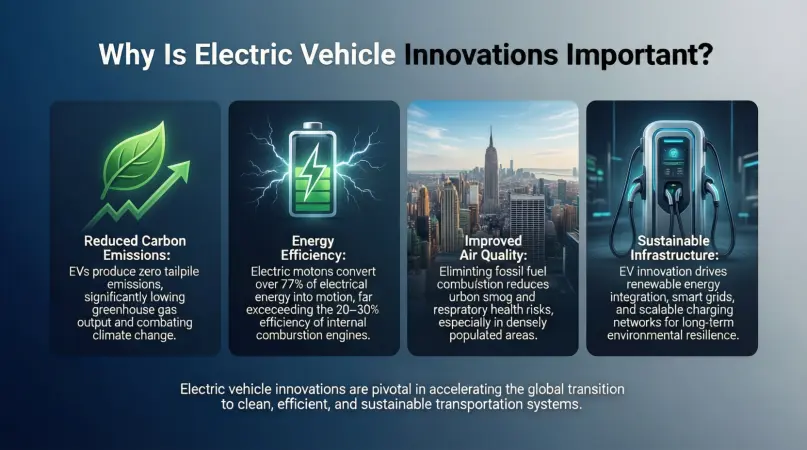
Electric vehicle innovations are important because they address major challenges facing the world today. One of the biggest issues is climate change. Traditional vehicles release harmful gases that pollute the air and damage the environment.
By improving electric vehicle technology, emissions can be reduced significantly. This helps cities achieve cleaner air and better public health. Electric vehicle innovations also reduce dependence on fossil fuels, which are limited and expensive.
Another important reason is cost efficiency. Although electric vehicles may cost more upfront, innovations help lower long-term expenses. Better batteries last longer. Efficient motors use less energy. Smart charging reduces electricity bills.
Electric vehicle innovations also support economic growth. New industries are created around battery production, charging networks, and software development. This leads to new jobs and skills.
Finally, innovation improves user experience. Quiet engines, smooth acceleration, and advanced safety features make electric vehicles enjoyable to drive. These benefits explain why electric vehicle innovations are essential for a modern transportation system.
Detailed Step-by-Step Guide
Step 1: Advancements in Battery Technology
Batteries are the heart of electric vehicles. Early batteries had limited range and long charging times. Innovation has changed this completely.
Modern lithium-ion batteries store more energy in less space. Solid-state batteries are also being developed. They promise higher safety and faster charging.
Battery management systems monitor temperature and usage. This extends battery life and improves performance. These improvements are key electric vehicle innovations.
Step 2: Faster and Smarter Charging Solutions
Charging used to be a major concern. Today, fast chargers can add significant range in minutes instead of hours.
Smart charging systems adjust power based on demand. This protects the grid and lowers costs. Wireless charging is another innovation being tested.
Public charging networks are expanding rapidly. Home charging solutions are also becoming more affordable and efficient.
Step 3: Efficient Electric Motors and Power Electronics
Electric motors convert electricity into movement. Innovations make them smaller, lighter, and more powerful.
Power electronics control energy flow between the battery and motor. Improvements reduce energy loss and increase driving range.
Regenerative braking is another key feature. It captures energy during braking and sends it back to the battery.
Step 4: Lightweight Materials and Vehicle Design
Reducing weight improves efficiency. Manufacturers now use aluminum, carbon fiber, and advanced plastics.
Aerodynamic designs reduce air resistance. This allows vehicles to travel further on the same charge.
These design-focused electric vehicle innovations directly impact performance and energy use.
Step 5: Software, Connectivity, and Smart Features
Modern electric vehicles rely heavily on software. Updates can be delivered remotely, improving performance over time.
Navigation systems plan routes based on charging availability. Driver assistance features improve safety.
Connectivity allows vehicles to communicate with charging stations and energy grids. This creates a smarter driving experience.
Benefits of Electric Vehicle Innovations
- Reduced air pollution and greenhouse gas emissions
- Lower fuel and maintenance costs
- Improved driving comfort and quiet operation
- Faster acceleration and smooth performance
- Increased energy efficiency
- Support for renewable energy integration
- Enhanced safety through advanced technology
- Long-term cost savings for users
Disadvantages / Risks
- Higher initial purchase cost
- Limited charging infrastructure in some regions
- Battery replacement costs can be high
- Charging time is longer than refueling petrol
- Environmental concerns related to battery production
- Performance may drop in extreme temperatures
- Dependence on electricity availability
Common Mistakes to Avoid
Many people misunderstand electric vehicle innovations. One common mistake is focusing only on purchase price instead of long-term savings.
Another mistake is ignoring charging needs. Planning home or workplace charging is essential for convenience.
Some buyers expect electric vehicles to behave exactly like petrol cars. Understanding differences helps set realistic expectations.
Finally, overlooking software updates can reduce performance. Keeping systems updated is part of owning an electric vehicle.
FAQs
What are the main electric vehicle innovations today?
The main electric vehicle innovations include advanced batteries, fast charging, smart software, efficient motors, and lightweight materials. Together, these improve range, safety, and user experience.
Are electric vehicle innovations expensive?
Some innovations increase upfront cost. However, lower fuel and maintenance expenses often balance this over time. Many users save money in the long run.
How long do electric vehicle batteries last?
Most modern batteries last eight to ten years or more. Innovations in battery management systems help extend lifespan and reliability.
Can electric vehicles handle long-distance travel?
Yes, improved range and fast-charging networks make long trips possible. Route planning tools help locate charging stations easily.
Are electric vehicle innovations environmentally friendly?
Electric vehicle innovations reduce emissions during use. Battery production has environmental impact, but recycling and cleaner manufacturing are improving.
Will electric vehicles replace traditional cars completely?
Electric vehicles are growing rapidly, but full replacement will take time. Electric vehicle innovations are accelerating this transition every year.
Expert Tips & Bonus Points
Experts recommend focusing on total cost of ownership rather than sticker price. This includes fuel, maintenance, and incentives.
Choose a vehicle with battery range that matches your daily needs. More range often means higher cost.
Install home charging if possible. It provides convenience and lower charging costs.
Stay informed about software updates and new features. Electric vehicle innovations often improve vehicles after purchase.
Finally, consider future resale value. As technology improves, well-maintained electric vehicles remain attractive in the market.
Conclusion
Electric vehicle innovations are transforming transportation in powerful and lasting ways. From better batteries to smart software, each improvement brings electric vehicles closer to mainstream adoption. These innovations are not just about technology. They represent a shift toward cleaner air, lower costs, and smarter mobility.
For beginners, understanding electric vehicle innovations helps remove fear and confusion. For intermediate readers, it offers deeper insight into how these systems work together. While challenges remain, progress is steady and promising.