
Introduction
In today’s digital world, data is one of the most valuable assets for individuals and businesses. From personal emails to customer records, almost everything is stored online. Because of this, data breach prevention has become a serious concern for everyone who uses the internet. A single mistake can expose sensitive information and cause financial loss, legal trouble, and loss of trust.
Many people believe that only large companies face data breaches. In reality, small businesses, freelancers, and even individual users are common targets. Hackers often look for easy opportunities, such as weak passwords or outdated software. Therefore, learning the basics of data breach prevention is no longer optional. It is a necessary skill in modern life.
This article is written in simple English to help beginners and intermediate readers understand how to protect data effectively. You will learn what a data breach is, why prevention matters, and how to reduce risks step by step. Practical examples and clear explanations will guide you through each concept.
By the end of this guide, you will feel more confident about protecting your data at home or at work. More importantly, you will understand that prevention is always easier and cheaper than recovery. Let us start by understanding what this topic really means and why it deserves your attention.
What is Data Breach Prevention?
Data breach prevention means taking actions and using tools to stop unauthorized access to sensitive information. This information may include personal details, financial data, login credentials, or confidential business records. The goal is to protect data from being stolen, leaked, or misused.
A data breach happens when someone gains access to data without permission. This can occur because of hacking, malware, phishing emails, or even human error. For example, sending an email to the wrong person can also cause a breach.
Prevention focuses on reducing these risks before an incident happens. It includes technical measures, policies, and good habits. Firewalls, encryption, and access control are technical steps. Training employees and using strong passwords are behavioral steps.
In simple terms, data breach prevention is about building strong digital locks and teaching people how to use them properly. It is a continuous process, not a one-time task.
Why is Data Breach Prevention Important?
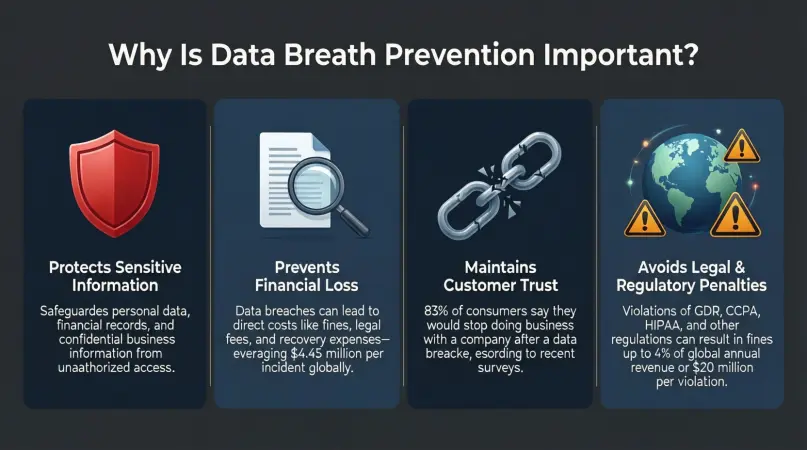
Data breaches can cause serious damage in a very short time. Once data is leaked, it is almost impossible to fully recover it. This is why prevention is so important.
First, data breaches can lead to financial losses. Stolen credit card details or bank information can be used for fraud. Businesses may face fines, lawsuits, and recovery costs.
Second, breaches damage reputation. Customers lose trust when their data is not protected. Rebuilding that trust can take years.
Third, legal and compliance issues are increasing. Many countries now have strict data protection laws. Failing to protect data can result in heavy penalties.
Finally, prevention saves time and stress. Dealing with a breach requires investigations, notifications, and system repairs. Preventive steps reduce the chances of facing such chaos.
Because of these reasons, data breach prevention should be a top priority for anyone handling digital information.
Detailed Step-by-Step Guide
Step 1: Identify Sensitive Data
The first step is knowing what data needs protection. Not all data has the same value or risk.
Make a list of sensitive information, such as:
- Personal identification details
- Financial records
- Login credentials
- Customer databases
Once identified, you can focus protection efforts on the most critical areas.
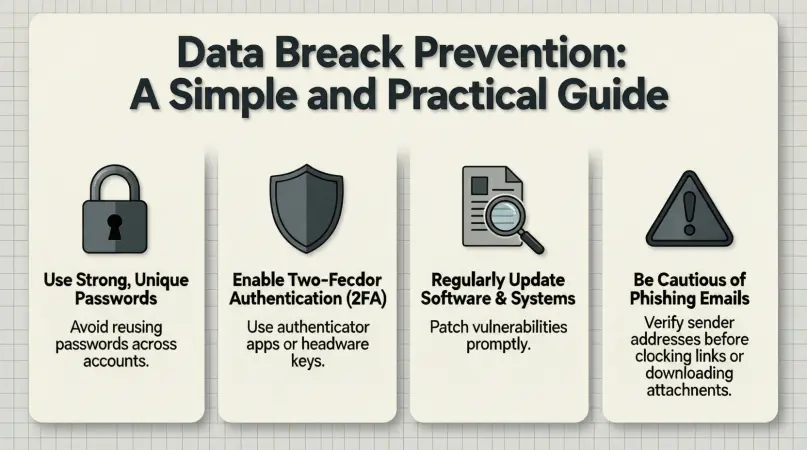
Step 2: Use Strong Password Practices
Weak passwords are one of the main causes of breaches. Many people still use simple or repeated passwords.
To improve security:
- Use long passwords with letters, numbers, and symbols
- Avoid using personal information
- Change passwords regularly
- Use a password manager if possible
This simple step greatly reduces risk.
Step 3: Enable Multi-Factor Authentication
Multi-factor authentication adds an extra layer of security. Even if a password is stolen, access is blocked without the second factor.
Common examples include:
- One-time codes sent to phones
- Authentication apps
- Biometric verification
This method is highly effective and easy to implement.
Step 4: Keep Software Updated
Outdated software often contains security weaknesses. Hackers actively search for these gaps.
Always:
- Install updates as soon as possible
- Use supported software versions
- Remove unused applications
Regular updates close known security holes.
Step 5: Train People and Build Awareness
Human error is a major cause of breaches. Phishing emails and fake links trick users into giving away information.
Training should cover:
- How to recognize suspicious emails
- Safe browsing habits
- Reporting unusual activity
Awareness turns users into a strong defense line.
Step 6: Control Access Levels
Not everyone needs access to all data. Limiting access reduces damage if an account is compromised.
Use role-based access, so users only see what they need. Review access rights regularly and remove unused accounts.
Step 7: Back Up Data Securely
Backups help recover data after an incident. However, they must also be protected.
Best practices include:
- Regular backup schedules
- Encrypted storage
- Offline or secure cloud backups
This ensures data availability without increasing risk.
Step 8: Monitor and Test Security
Continuous monitoring helps detect unusual activity early. Security testing reveals weaknesses before attackers do.
Use logs, alerts, and regular assessments. Prevention improves when problems are found early.
Benefits of Data Breach Prevention
- Protects sensitive personal and business information
- Reduces financial losses and legal risks
- Builds trust with customers and partners
- Improves overall system reliability
- Saves time by avoiding crisis management
- Supports compliance with data protection laws
Disadvantages / Risks
- Initial setup may require time and effort
- Security tools can have costs
- Training requires regular updates
- Overly strict controls may slow workflows
Despite these points, the benefits clearly outweigh the risks.
Common Mistakes to Avoid
Many breaches happen because of simple mistakes. Avoiding them improves security instantly.
One common mistake is ignoring updates. Delaying patches leaves systems exposed. Another mistake is using the same password everywhere, which allows attackers to access multiple accounts at once.
Some people also underestimate insider threats. Employees or contractors can accidentally or intentionally cause breaches. Finally, relying only on technology without training people creates gaps.
Avoiding these mistakes strengthens your overall defense.
FAQs
What is the most common cause of data breaches?
The most common cause is human error, such as falling for phishing emails or using weak passwords. Technical flaws also play a role, but user behavior is often the main issue.
Can small businesses be targeted by hackers?
Yes, small businesses are frequent targets because they often have weaker security. Attackers see them as easy opportunities.
Is data breach prevention expensive?
Basic prevention steps are affordable. Strong passwords, updates, and training cost very little compared to breach recovery.
How often should security measures be reviewed?
Security should be reviewed regularly, at least every few months. Reviews are also needed after system changes or incidents.
Do individuals need to worry about data breaches?
Absolutely. Personal accounts contain valuable data. Identity theft and financial fraud often start with individual breaches.
What should be done if a breach is suspected?
Act quickly. Change passwords, isolate affected systems, and investigate the source. Early action limits damage.
Expert Tips & Bonus Points
Think of security as a habit, not a project. Small daily actions make a big difference over time.
Use simple policies that people can follow easily. Complex rules are often ignored. Test your defenses regularly to stay ahead of threats.
Finally, remember that data breach prevention is about balance. Strong security should support work, not block it. When protection and usability work together, results are best.
Conclusion
Protecting data is no longer a technical issue limited to IT teams. It is a shared responsibility that affects individuals, businesses, and organizations of all sizes. As digital information continues to grow, the risks associated with poor security also increase.
Data breach prevention works best when it combines technology, awareness, and good habits. Simple steps such as strong passwords, regular updates, and user training can significantly reduce risks. These actions do not require advanced skills, only consistency and attention.